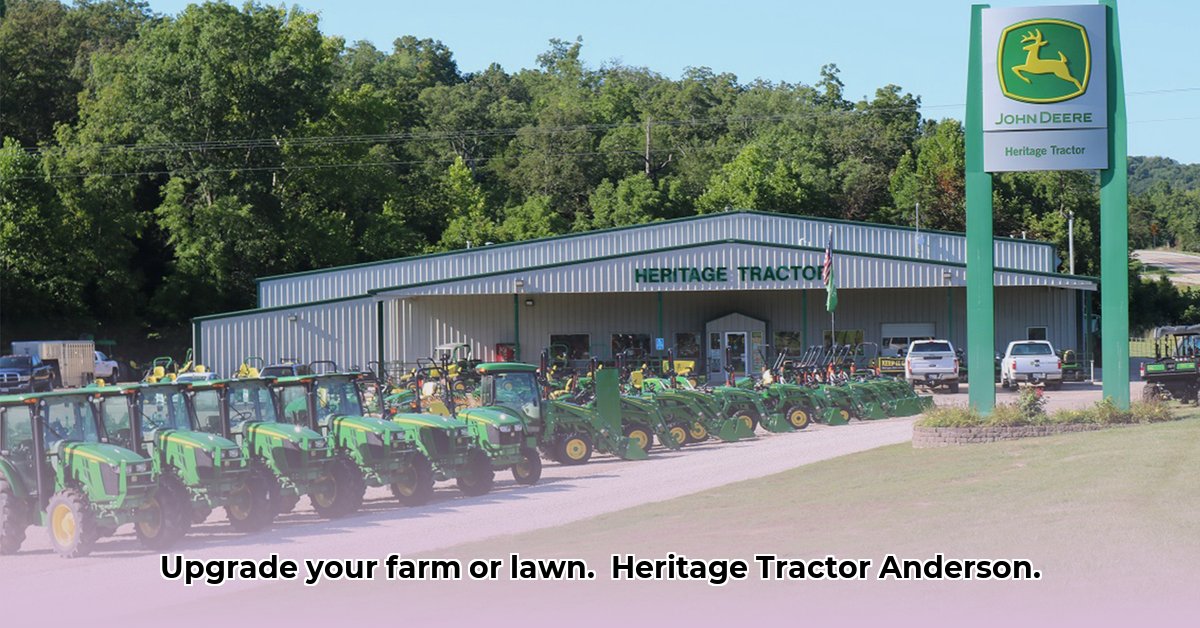
Heritage Tractor Anderson offers a diverse range of equipment for agricultural and landscaping needs in Southwest Missouri, strategically positioned to serve a growing market. While their strong service reputation and product selection are clear assets, a deeper dive into quantifiable data is needed to fully assess their market position. This article examines their strengths, addresses data gaps, and explores opportunities for future growth.
Serving Southwest Missouri's Agricultural and Landscaping Needs
Heritage Tractor Anderson benefits from an advantageous location near Northwest Arkansas's expanding agricultural and landscaping sectors. Their diverse product lines cater to a broad customer base, spanning small landscaping projects to large-scale farming operations. They stock a range of tractors, STIHL and Honda power equipment, and even Traeger grills, creating a one-stop shop for many property owners. However, a lack of readily available data on market share and sales figures prevents a complete assessment of their current market dominance. This lack of data, though a limitation, also represents a key opportunity for future growth. How can this missing information be leveraged to propel the company forward?
Strong Service and a Diverse Product Line: Key Differentiators
Heritage Tractor Anderson’s customer service is a significant strength, particularly in a rural market. Their convenient pickup and delivery service for equipment maintenance is a key differentiator, fostering strong customer relationships and repeat business. This personalized service, combined with a diverse product line catering to both agricultural and landscaping needs, demonstrates a strategic approach to market diversification. But how does this translate into actual market share and profit margins? This question underscores the need for further data analysis.
Addressing Data Gaps: An Opportunity for Strategic Growth
The absence of quantifiable data on market share, sales figures, and customer demographics presents a significant opportunity for improvement. By investing in robust market research, Heritage Tractor Anderson can gain a clearer understanding of customer needs and preferences. This data-driven approach can inform inventory management, marketing strategies, and overall business planning. Such research would allow them to accurately assess their competitive standing and identify potential niches for expansion. What specific customer segments are currently underserved, and how can Heritage Tractor Anderson capitalize on these opportunities?
Understanding Market Position: A Competitive Analysis
While detailed competitor analysis is currently limited, it is clear that understanding the competitive landscape is crucial for future strategic planning. Further research should identify key competitors, their strengths and weaknesses, and the overall market dynamics in Southwest Missouri. This understanding will be critical for effective positioning and differentiation. What competitive advantages can Heritage Tractor Anderson leverage to further strengthen their market position?
Embracing Sustainability: A Path to Future Growth
The adoption of sustainable practices presents another growth opportunity. Promoting fuel-efficient equipment and environmentally friendly options aligns with growing consumer demand for sustainable agriculture and landscaping solutions. Offering training and resources on sustainable practices would further enhance their value proposition. How can Heritage Tractor Anderson leverage sustainable agriculture principles to differentiate themselves and attract environmentally conscious customers?
Actionable Steps for Growth: A Collaborative Effort
To maximize their potential, different stakeholders must play a key role in Heritage Tractor Anderson's continued success.
Heritage Tractor Anderson: Invest in comprehensive market research, implement customer satisfaction surveys, and develop robust data analytics systems for ongoing monitoring and improvement. Explore expansion into Northwest Arkansas and other underserved markets.
John Deere (and other equipment manufacturers): Provide targeted marketing support specific to Heritage Tractor’s region and offer training programs focused on sustainable agricultural practices. Support Heritage Tractor’s growth through collaborative technology integration and other initiatives.
Farmers and Landscapers: Explore financing options, consider leasing agreements, and carefully investigate equipment features to optimize their investments and operational efficiencies. Adopt sustainable practices to reduce environmental impact and enhance long-term profitability.
Conclusion: A Promising Future
Heritage Tractor Anderson holds significant potential for growth within the Southwest Missouri market. While the absence of concrete data necessitates further investigation, their strong service, diverse product offerings, and advantageous location provide a robust foundation for future success. By addressing the data gaps, embracing sustainability, and actively engaging with stakeholders, Heritage Tractor Anderson can realize its full potential and become a leading equipment provider in the region.